

Can You Use U.S. Accounting Software for a French Subsidiary?
The short answer is no. American and French accounting solutions are generally not compatible out-of-the-box due to fundamental differences in legal, tax, and regulatory requirements.
You cannot simply use a US-based accounting platform to manage the mandatory local bookkeeping for a French entity. The challenge isn’t just the software itself; it’s the rigid local obligations and the specific digital reporting formats required by French tax authorities.
1. The Fundamental Gap: Reporting vs. Compliance
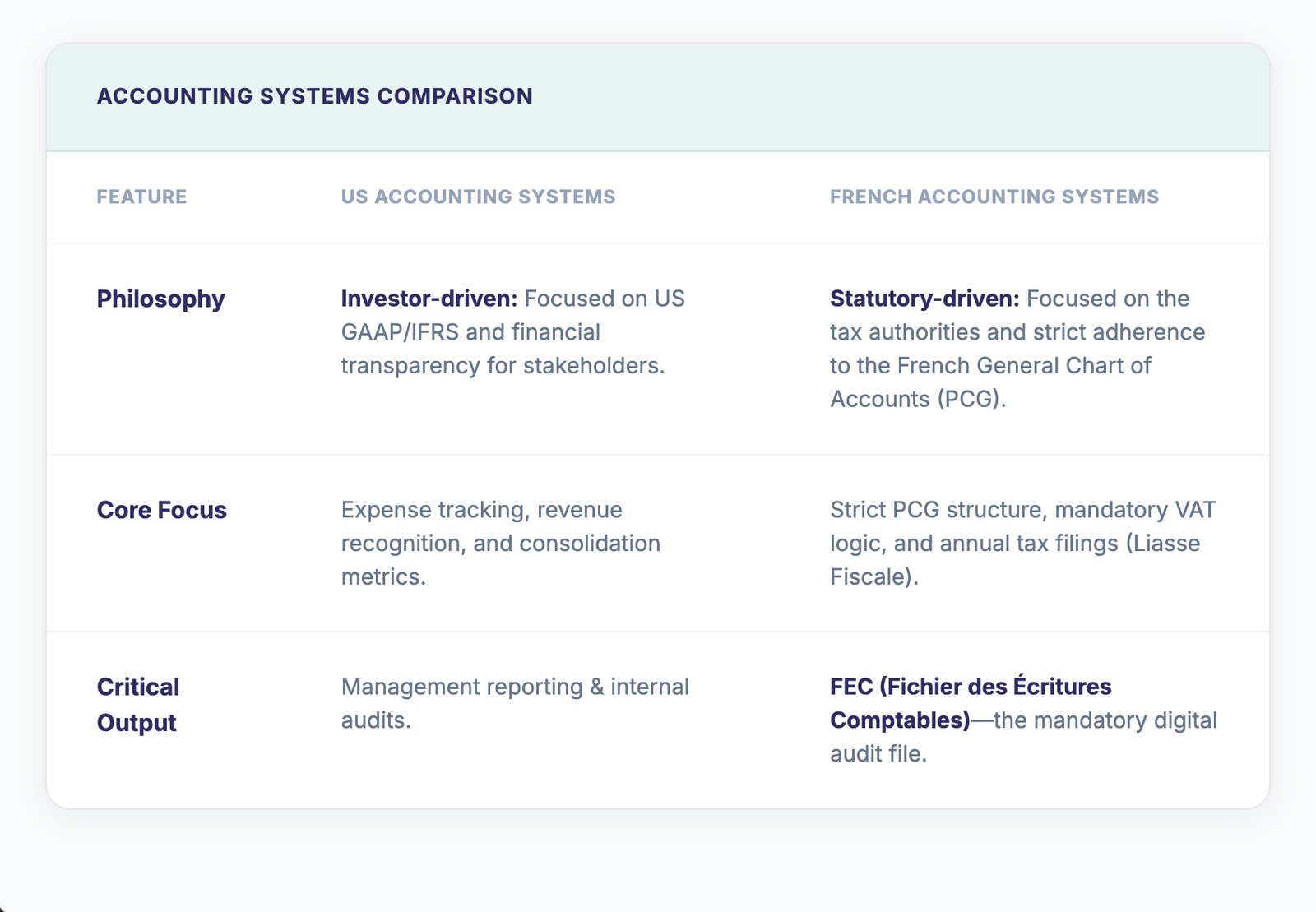
A US software platform (like QuickBooks US or a standard ERP) will struggle to produce a compliant FEC (Fichiers des Ecritures Comptables) without significant manual intervention, which increases your audit risk.
2. Key Areas of Disconnect
Successfully operating in both jurisdictions requires managing three distinct data streams that rarely align:
The Chart of Accounts
The French Plan Comptable Général (PCG) is a rigid, legally mandated numbering system. US charts are often flexible and customized; however, in France, every transaction must map precisely to specific PCG codes.
VAT (TVA) Management
French Value Added Tax (VAT) involves complex recovery rules and strict filing deadlines. U.S. platforms aren’t built to automate the specific reporting forms the French treasury requires, which means someone ends up doing it manually. That’s where errors accumulate.
Dual Reporting Obligations
Your US parent needs data for consolidation under US GAAP, while your French entity needs data under the PCG. This creates a “reconciliation gap” that must be bridged to ensure data integrity across the Atlantic.
3. Achieving Transatlantic Data Flow: The Two-Tier Approach
The solution lies in integration and bridging rather than direct compatibility.
Local Tools for Local Compliance
Your French entity should use a system certified for the French market (such as Cegid, Sage, or a properly configured Odoo/NetSuite instance). This is what generates the FEC, the liasse fiscale, and keeps you clean with the tax authorities.
Implementing a Consolidation Bridge
An integration layer pulls data from the French system, maps PCG account codes to your U.S. Chart of Accounts, and applies any GAAP adjustments (depreciation schedules, revenue recognition differences, etc.) so your finance team gets the clean consolidated view they need.
4. The Bottom Line
Working with transatlantic experts like Orbiss x Impulsa ensures this bridge is properly configured, giving your US finance team accurate, real-time data without disrupting local French compliance.